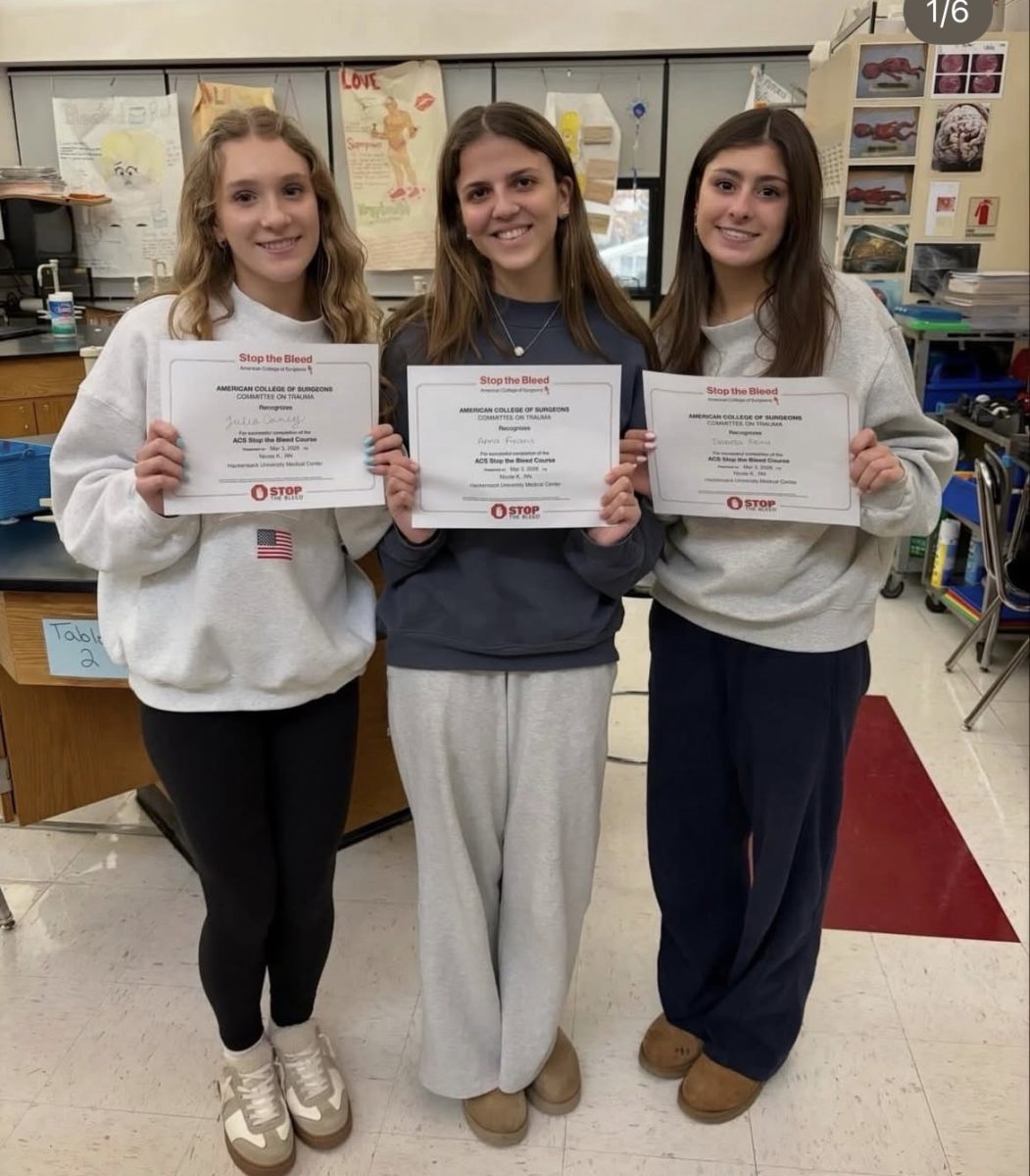








The River Dell Future Doctors and Nurses Club recently welcomed Trauma Injury Prevention Coordinator Nicole Kilgallen from Hackensack Meridian Health for an engaging and eye-opening presentation on the Stop the Bleed program.
Kilgallen began by asking students what they already knew about Stop the Bleed, comparing the program’s importance to CPR. She explained that severe bleeding is the number one cause of preventable death after injury. In emergencies such as car accidents, machinery incidents, sports injuries, or even everyday accidents like kitchen cuts, a person can bleed out in just three to five minutes. However, emergency medical services often take around fifteen minutes to arrive. This gap highlights why bystanders must know how to act quickly.
“So just be mindful with bleeding to stop. Take a breath, and just look at the whole situation,” said Kilgallen.
The training focused on the simple ABC method: Alert, Bleeding, and Compression. First, students learned the importance of calling 911 immediately and ensuring the scene is safe. Next, they were taught how to identify life-threatening bleeding. Finally, they practiced compression techniques, including direct pressure, wound packing, and proper tourniquet application.
“Your body’s full of vessels, and unfortunately, sometimes that could cause a lot of bleeding if you’re cut close to a large vessel,” said Kilgallen.
Kilgallen emphasized that students should use whatever materials are available, such as clothing or towels, if medical supplies are not nearby. The goal is to slow or stop blood loss long enough for first responders to arrive. Students also practiced applying tourniquets correctly, learning the “high and tight” rule and understanding the importance of noting the time of application.
“Packing and pressure is enough to slow the bleeding enough that they can make it safely to a hospital,” said Kilgallen.
The presentation reinforced that these lifesaving skills apply to people of all ages. By hosting this hands-on training, the River Dell Future Doctors and Nurses Club empowered students with practical knowledge that could one day save a life.