



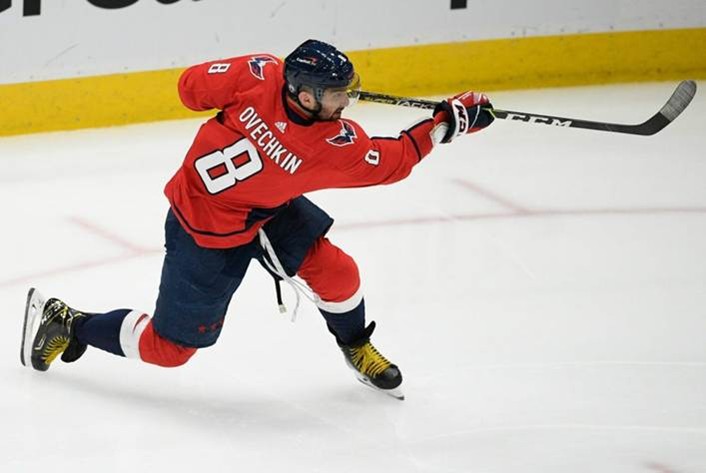


On March 22nd, 2026, Washington Capitals captain Alexander Ovechkin scored his 1000th career goal against the Colorado Avalanche.
The 40-year-old Russian has been skating and scoring since his debut in 2005, when, in his first game, he netted not one, but two goals, setting a high precedent for his now illustrious career.
Ovie’s goal on the 22nd was his 923rd, not including goals during the playoffs, which he is the leader in. Ovechkin previously passed “The Great One,” Wayne Gretzky, for most regular-season goals on April 6th, 2025, in a game against the New York Islanders. That goal, his 895th, set him atop the mountain for most regular-season goals, but not most including the playoffs.
The National Hockey League measures goals in two different ways. One includes playoff goals; the other does not. The reason the NHL keeps track of players’ career goals not including playoff goals is to make it fair for players who are on poor teams that aren’t able to make the playoffs, where they would be able to score more goals and add to their overall goal total.
If you include the playoffs, it was Ovechkin’s 1000th. While he may have the most regular-season goals, he is second all-time in most goals scored including playoffs. His 1000 goals are second only to Gretzky, who scored 1016 goals including the playoffs. They are the only two players in NHL history to achieve 1000 or more goals.
Famously, Gretzky and the teams he played for were consistent playoff and Stanley Cup contenders. Gretzky won four Stanley Cups, and he made the playoffs 16 times out of his 20 seasons played, including a stretch where he made the playoffs every year from 1980–1995.
Ovie was finally able to add his name to the Stanley Cup when he and the Caps won it all in the 2017–18 NHL season. Their win in 2018 is Ovie’s and the Capitals’ franchise’s only Stanley Cup win to date.
Despite Ovie’s individual success, the Capitals sit third to last in the Metropolitan Division, only above the New Jersey Devils and New York Rangers. In his 1000th-goal game, the Capitals didn’t even manage a win, losing 3–2 to the Avalanche in overtime. While not mathematically eliminated from making the playoffs, the Capitals would need to end the season remarkably well to even have a chance at contending for the Cup.
The 2026 season is Ovechkin’s 21st, and after its conclusion, he will become an unrestricted free agent. While Ovechkin is 40—and would be 41 if he played during the 2026–27 season—it wouldn’t be unheard of to see him stay in the league for at least one more season. Gordie Howe and Chris Chelios hold the record for most NHL seasons played at 26. Howe played his final season at the age of 52, over a decade older than Ovechkin. However, whether he could is secondary to whether he wants to.
Over a year ago, Ovechkin stated he didn’t think he would sign another contract with the Capitals, making the 2025–26 season his last, although he has not made any formal announcements. Ovechkin has expressed on multiple occasions that he would like to end his hockey career playing for the Kontinental Hockey League’s Dynamo Moscow team, where he started his professional career, playing for them from 2001–2005.
Ovechkin previously rejoined his old club during the 2012–13 season, when there was an NHL lockout. Ovie played 31 games for Dynamo Moscow, where he recorded 40 points, before he came back to the Capitals upon the lockout’s end.
As of the 22nd, Ovechkin has scored 26 goals during the 2025–26 season. So, if he were to stay in the league and managed to score at the same level of production that he has during this season, he would eclipse Gretzky about halfway into next season, and he’d put himself at nearly 950 goals in the regular season alone by season’s end, a feat accomplished by no one in NHL history.
Although Ovechkin is not a perennial winner like Howe or Gretzky, he is by far one of the most prolific scorers in NHL history and a shoo-in for the Hockey Hall of Fame.
He could retire today, and to many, he would sit among the best of the best NHL legends. But still, he continues to play, score, and try to lead his team to victory because, in his words, “Russian machine never break.”