










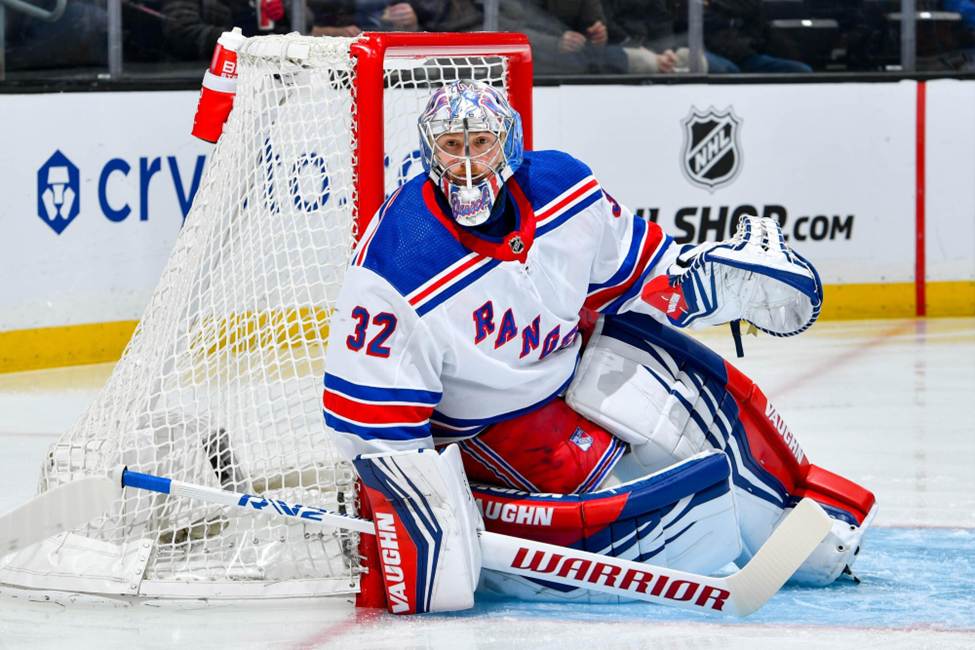
Recently, New York Rangers goaltender Jonathan Quick announced his retirement from the National Hockey League. Quick played 19 seasons in the NHL, winning three Stanley Cups: two with the Los Angeles Kings (2012 and 2014) and one with the Vegas Golden Knights (2023). He ended his career as the winningest American-born goalie in NHL history.
He won the Conn Smythe Trophy as the most valuable player during his 2012 Stanley Cup run with the Kings. In two separate seasons, he allowed the fewest goals in the league, earning the William M. Jennings Trophy. A three-time All-Star, Quick recorded 65 regular-season shutouts, placing him 17th all-time in that category—once again, the most by any American-born goalie.
Quick ranks 12th all-time in wins among goaltenders, with 410—nine more than the second-place American goalie, Ryan Miller, whom he surpassed in February 2024. The list of winningest goalies is dominated by Canadian-born players; of the top 10, eight are Canadian, with the other two hailing from Sweden and Russia.
The NHL has historically been dominated by America’s neighbors to the north. In the league’s first season (1917–18), a staggering 93.1% of players were Canadian. In fact, Americans were not even the second-most populous nationality in the league, as the United Kingdom represented 4.8%, while the United States made up just 2.1%.
Quick was drafted 72nd overall by the Kings in 2005. He became the team’s full-time starter during the 2008–09 season and held that role until he was traded during the 2022–23 season. He was first dealt to the Columbus Blue Jackets on March 1, 2023, but never suited up for them. Just one day later, the Blue Jackets sent the 6’1” backstop to the Vegas Golden Knights.
The Golden Knights, a relatively new NHL franchise that began play in 2017–18, benefited from Quick’s experience. He helped the team reach its second Stanley Cup Final and secure the first championship in franchise history.
As a free agent at 37 years old and fresh off his third Cup win, Quick signed with the New York Rangers—the same team he faced in the 2014 Stanley Cup Final.
Quick, who had been a starter for nearly his entire career, transitioned into a backup role behind Rangers starter Igor Shesterkin. The shift from playing full 60-minute games to being used more sparingly can be difficult for many athletes. Moving from a primary role to a secondary one can affect both performance and mindset, as reduced playing time and a new environment present new challenges.
Quick, however, handled the transition well. During his time with the Rangers from 2023 to 2026, he added 33 regular-season wins to his total. In the 2025–26 season, when Shesterkin was injured against the Utah Mammoth on January 5, Quick stepped in to help steady the team and keep them in playoff contention. Despite his efforts, the Rangers missed the playoffs for the second consecutive season.
With no playoff run ahead and as the oldest active NHL goaltender, Quick chose to bring his illustrious career to a close, playing his final game against the Florida Panthers.
Quick leaves behind an all-time NHL career, proving he could succeed as both a starter and a backup while delivering some of the league’s best goaltending. He carved out a legacy in a position historically dominated by international talent and stands as a clear first-ballot Hall of Fame candidate. His impact on all three franchises he played for will keep his name in conversations among the greats for years to come.