



The following is a boring, dumb, meandering debate between two sad, lonely teenagers who are about six years too old to still care about a science fiction franchise with small, furry animals called “Ewoks.” Nevertheless, an average reader might get some entertainment out of this otherwise pathetic display via sheer mockery. So, enjoy it. Or don’t. There is no try… or something or another.
[spoiler warning for the Star Wars franchise]
Pro-Prequel Position from Jack Leahy:
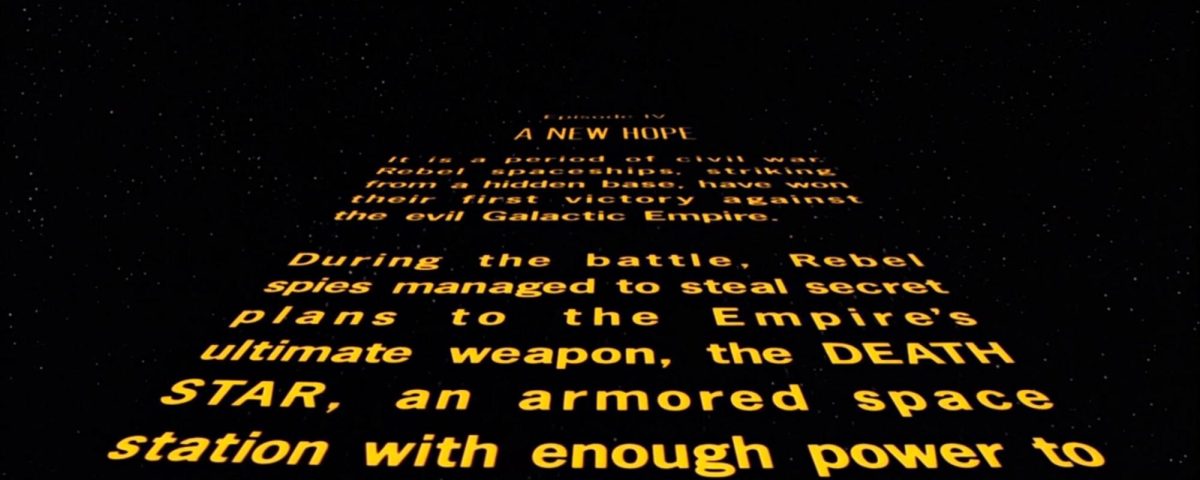
Iconic. Breathtaking. Engaging. These are all words that can be used to describe George Lucas’ magnum opus of a franchise, Star Wars.
Up until late 2015, Star Wars was a six-movie series, with some TV show tie-ins, video games, and comic books. But for most fans, their love stopped at just the movies, which is entirely fine. Lucas crafted an entire world that, yes, has been heavily expanded upon by both himself and other creative minds, but can also be easily enjoyed by just watching the mainstream movies.
Lucas crafted the “Original Trilogy” through the 1970s and ’80s. Lucas always knew he wanted to make Star Wars one giant overarching story. But due to technological and budget constraints, he decided to start right in the middle with Star Wars: A New Hope. Despite the main character of the movie being Luke Skywalker, the main character of the Star Wars series is the villain of A New Hope, Darth Vader.
You don’t learn all that much about Vader across Lucas’ first three movies, something he set out to rectify nearly 20 years later with his prequel trilogy.
In 1999, fans were given their first taste of Star Wars since 1983, as Lucas released the first installment of this new trilogy, The Phantom Menace.
Let’s get something straight off the rip. The prequels are not some of the greatest movies you’ll get to see.
Poor CGI, bad acting, poor dialogue, odd pacing, some plot issues, and… Jar Jar. But if you’re a Star Wars fan, you can begin to peel back the layers to at least see what Lucas was trying to accomplish.
In fact, as a whole, The Phantom Menace is one of the more boring movies you could subject yourself to. It is over 2 hours of context, set-up, and background information, with a very well-choreographed fight at the end.
But there are quite a lot of positives:
Despite the poor acting the prequels would end up being known for, Liam Neeson does a fantastic job playing the stoic and wise Qui-Gon Jinn. Ian McDiarmid (Chancellor Palpatine), Frank Oz (Yoda), and all the actors who came back to reprise the roles they played in the “Original Trilogy” did a wonderful job. Ewan McGregor, who played Obi-Wan Kenobi, is also a highlight, and he would go on to be a great addition to the cast as the series went on. In spite of his small screen time, Samuel L. Jackson (Mace Windu) made a lasting impression that would make him a much bigger character in the next installments. And finally, the combination of Ray Park’s physical acting and the voice dubbing of Peter Serafinowicz made Darth Maul, the movie’s main villain, instantly recognizable and iconic.
In the movie, we’re introduced to a young Anakin Skywalker on his home planet of Tatooine. Obi-Wan, Qui-Gon, and the disguised Queen of Naboo, Padmé Amidala (Natalie Portman), are stranded on Tatooine, and they need help from Anakin to earn enough money to buy the parts they need to fix their ship and get off.
While there, Qui-Gon realizes there is something special about Anakin, and he convinces him to join them to be trained as a Jedi.
Even though the movie dumps a lot of context on the viewer, it also gives some much-needed context for Darth Vader’s higher-up, Emperor Palpatine. What you have to understand about Palpatine, at least in this movie, is that he’s a little-known senator from a little planet called Naboo. It’s all very political.
In fact, the political landscape of the real world was (poorly) infused into the Star Wars prequels. Watching movies or getting involved in media is often a way for people to escape the troubles of the real world. So, turning on an action sci-fi, laser-sword battle movie, only to be confronted with the exact political views and debates they tried to avoid by putting said movie on, can leave a sour taste in the mouth of the audience.
The characters are seemingly at a standstill for the entirety of the movie, spending a majority of the 2-hour, 16-minute runtime stuck on Tatooine.
So, with so many negatives—and said negatives seemingly outweighing the positives—what’s the point of even watching The Phantom Menace? If you go into the movie with low expectations and try to turn your brain off just a bit, there is a plethora of interesting sequences, cool cinematography, little details, and necessary context if you’re interested in the Star Wars franchise as a whole.
Lucas viewed the story of Star Wars as a whole, so if you watch The Phantom Menace alone, it will feel extremely incomplete. It is one puzzle piece in the entire story of Star Wars. The movie is not perfect by any means. It isn’t even all that good if we’re comparing it to other movies in the franchise, let alone all the other movies outside of Lucas’ creative umbrella.
If you choose to view Star Wars as one overarching story, The Phantom Menace simply acts as the boring introductory chapter that you appreciate for what it sets up, but end up skipping if you choose to rewatch the series.
Anti-Prequel Position from Ryan Posluszny:
Unlike my co-writer on this article, I strongly dislike the prequels.
The original Star Wars series, directed by George Lucas in the late ’70s and early ’80s, was really good. I can’t say that I’m a Star Wars superfan, but I find these films to be enjoyable, well-shot, and innovative.
The prequels, on the other hand, don’t reach these standards. They are way too long, poorly written, and uneven in tone and pacing. The dialogue and acting are terrible. Much of the blame for this can be placed on Lucas, as he received little pushback for his poor ideas while making the prequels. While making the originals, the actors and others involved in production told him when he did wrong and made changes to the original plan.
I’ll quickly run through each prequel to explain what I hate about them. The Phantom Menace is boring. Attack of the Clones is cheesy. Revenge of the Sith is the strongest of the trilogy, but places too much emphasis on action over plot and rushes Anakin’s arc. Overall, more emphasis was placed on action and romance than actual substance and story in these movies.
Each movie is drawn-out and feels tedious to watch. They are unbalanced—too little time is spent on character development and too much time on boring space politics that ultimately have no significance in the end. We all know how the story ends—Anakin becomes Vader. Now focus on how that happens, or there is no reason for us to watch.
To add to all the issues with the actual plot of the films, the effects are hit or miss. Some of them actually look really cool, like the lightsaber duel at the end of Revenge of the Sith, but others, like the droid factory in Attack of the Clones, look weird and fake. This was recognized even at the time, so it’s not a retrospective criticism comparing to today’s effects, unlike many of the criticisms of the original series’ lightsaber duels.
In my opinion, the prequels were just unnecessary. The original series was amazing by itself, and there was no need to explore what happened before. In fact, part of the magic of the originals was the mystery behind Darth Vader. The unmasking at the end of Return of the Jedi was all the demystifying we needed of this character. Now, the public sees Hayden Christensen’s face when they think of young Vader, when they should really be able to make up their own ideas. Whether Lucas intended for the prequels to always exist or not is irrelevant. Many creators have intended for extra seasons or movies in their projects which end up horribly, like seasons 8 and 9 of The Office.
People only look back on them positively now because the sequels were so bad that they made the prequels look better in comparison. What they fail to recognize is that the prequels ultimately started the transition from Star Wars being a relatively well-respected movie series to a massive corporate slop monster that generates bad content to this day for cash grabs with a mostly adult, obsessive fanbase.
Oh yeah, and Jar Jar Binks makes me want to rupture my own eardrums just so I don’t have to hear his voice.